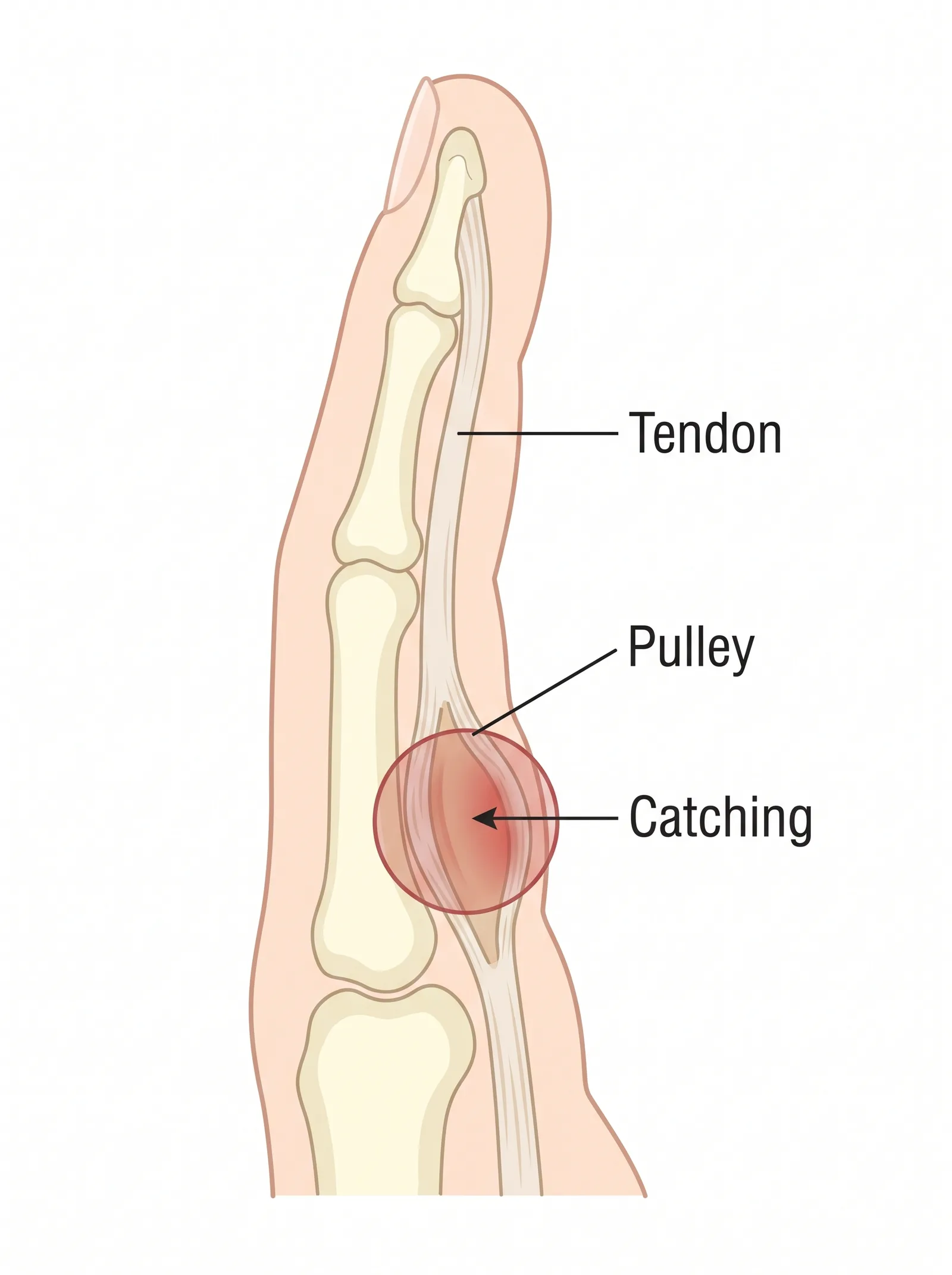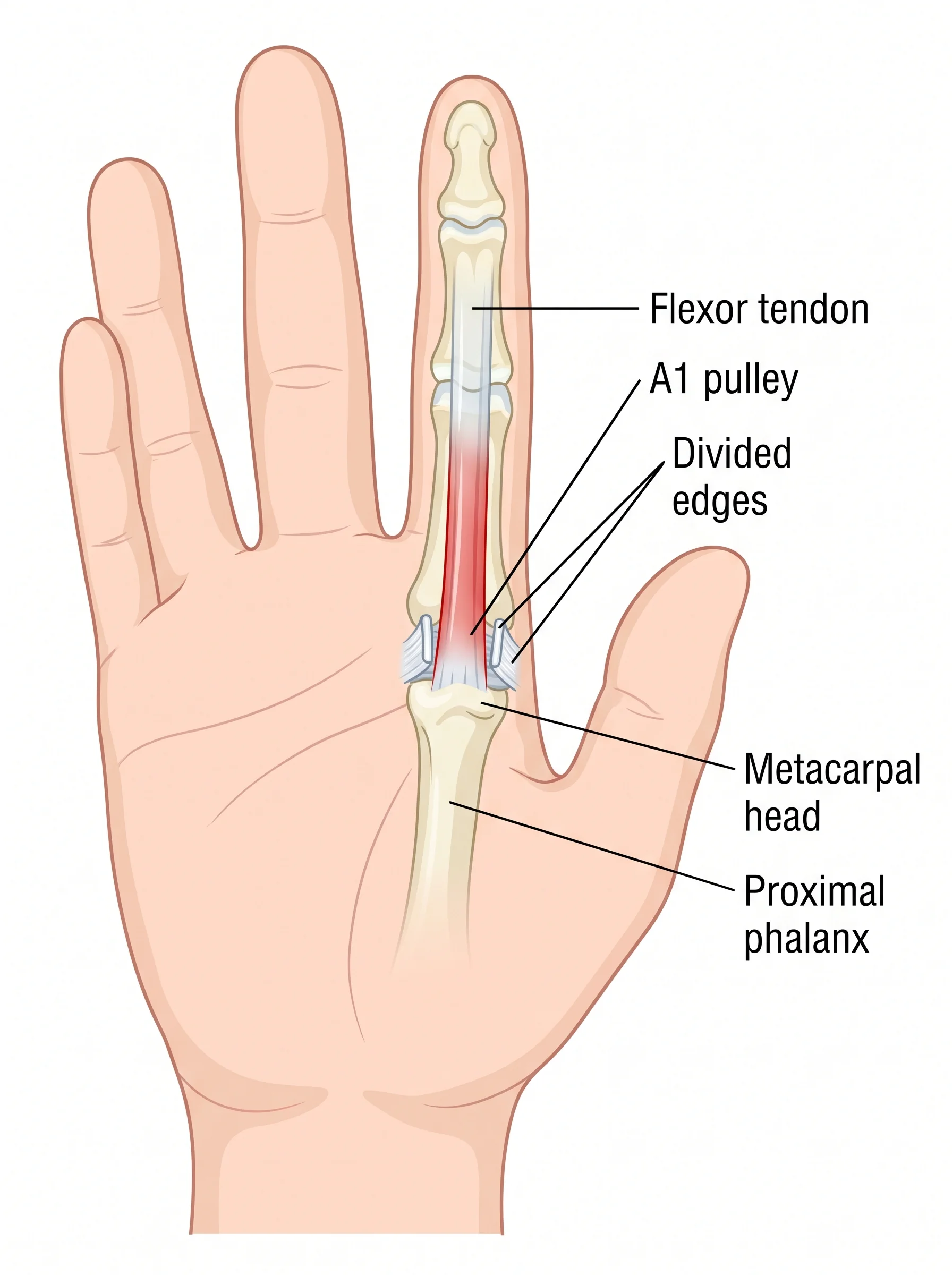
Trigger finger release is a procedure that opens the tight pulley at the base of a finger so the tendon glides smoothly again. Dr. Hunter performs trigger finger release in Columbia for a finger that keeps catching or locks despite splinting and injections.
Lee Hunter performs trigger finger release in Columbia when it is the right step, and reviews every alternative with you first.
Who performs trigger finger release in Columbia?
Lee Hunter is a board certified orthopedic surgeon who performs trigger finger release in Columbia, TN. Dr. Hunter sees patients at the practice in Columbia; appointments can be requested through this site.
What do patients ask most?
Is trigger finger release a major surgery?+
Will the catching come back after release?+
How soon can I return to work?+
Do I need hand therapy afterward?+
What is Trigger Finger Release?
Trigger finger, known medically as stenosing tenosynovitis, happens when a finger tendon or its lining swells and no longer slides smoothly through the first pulley at the base of the finger.
The finger then catches, locks, or snaps.
Trigger finger release opens that tight pulley, called the A1 pulley, so the tendon can move freely again. Relieving the catch point restores smooth bending and straightening.
The procedure is short and usually done as an outpatient with local anesthesia, meaning only the hand is numbed and you go home the same day.
What happens during Trigger Finger Release, step by step?
In open release, the surgeon makes a small incision in the palm at the base of the finger and divides the tight A1 pulley under direct view.
Some surgeons use a percutaneous technique, dividing the pulley with a needle through the skin without an open incision. Both free the tendon. Your physician will explain which approach suits your finger. The surgery usually takes only a few minutes once the hand is numb.
What is recovery like after Trigger Finger Release?
Most people move the finger right away and use the hand for light activity within days.
Soreness and mild swelling settle over a few weeks, and full comfortable use commonly returns within several weeks, according to general guidance from the American Academy of Orthopaedic Surgeons. These are ranges, not promises. Hand therapy is sometimes used if the finger was stiff before surgery. Your physician will guide your return to normal tasks.
Read the full guide to preparing for surgery →
Your own recovery instructions come from the office and are specific to you. This page describes the general course, not a plan to follow.
How do payments work?
Contact the office to confirm insurance participation.
Trained at Campbell Clinic (Orthopaedic Surgery Residency). Sees patients in Columbia.
About Dr. Hunter →