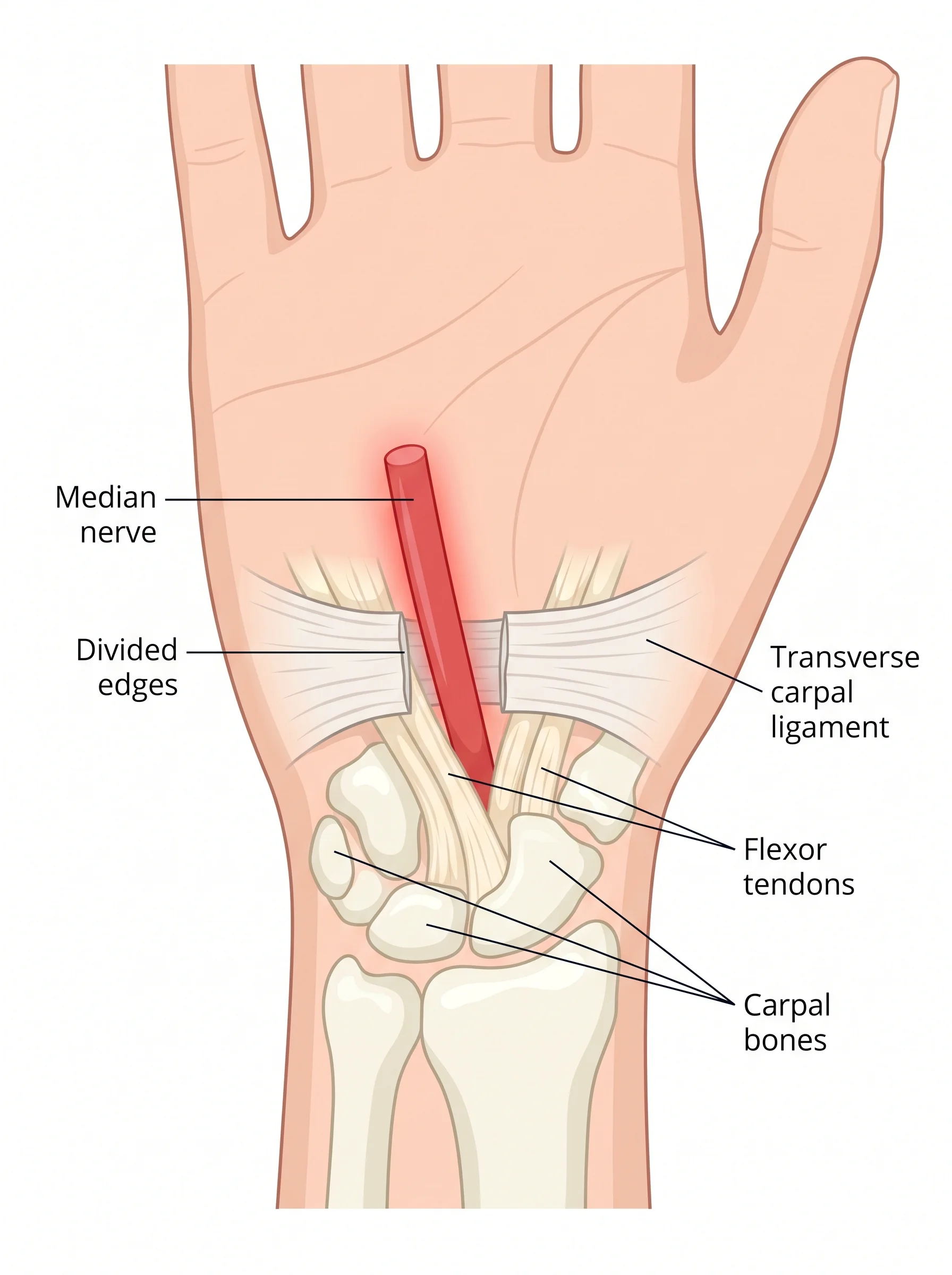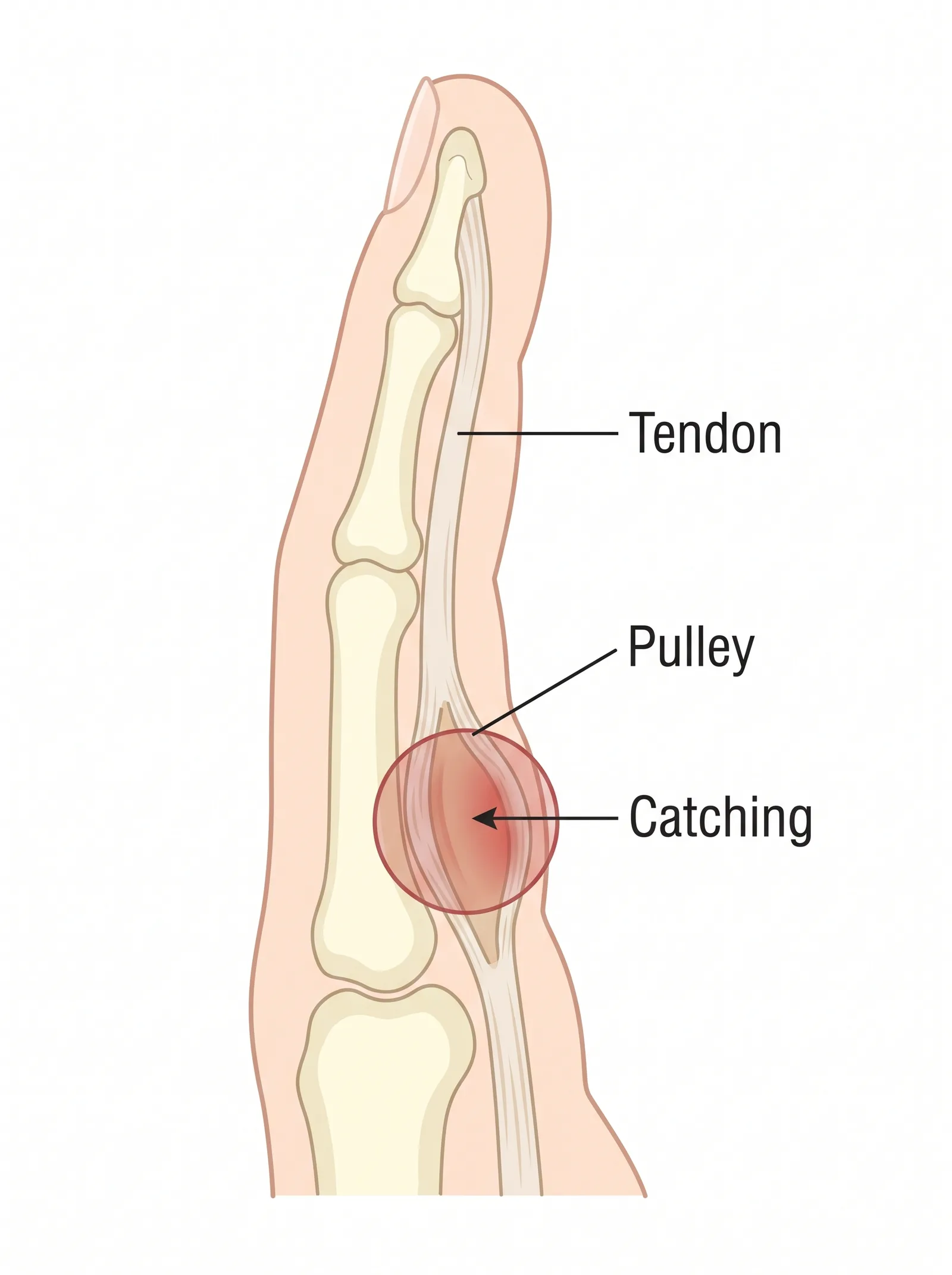
Trigger finger is a catching or locking of a finger caused by a swollen tendon that no longer glides smoothly. Dr. Hunter treats trigger finger in Columbia, beginning with splinting, activity changes, and injections, and offering trigger finger release surgery when the finger keeps catching or locks in place.
Lee Hunter diagnoses and treats trigger finger in Columbia, from the first visit through recovery.
What do patients ask most?
Will trigger finger fix itself?+
Do steroid injections work?+
Is trigger finger related to carpal tunnel syndrome?+
How soon can I use my hand after release surgery?+
Who treats trigger finger in Columbia?
Lee Hunter is a board certified orthopedic surgeon who treats trigger finger in Columbia, TN. Dr. Hunter sees patients at the practice in Columbia; appointments can be requested through this site.
What is Trigger Finger?
The tendons that bend your fingers slide through a series of snug tunnels called pulleys.
Trigger finger, known medically as stenosing tenosynovitis, happens when a tendon or its lining swells and no longer passes smoothly through the first pulley at the base of the finger.
The result is a catching, popping, or locking feeling when you bend or straighten the finger. Some people notice a tender bump in the palm. In the morning the finger may be stiff or stuck in a bent position, then snap straight.
Trigger finger is more common in people with diabetes and in those whose work or hobbies involve repeated, firm gripping. It can affect any finger or the thumb.
How is Trigger Finger diagnosed, and what does the visit involve?
Trigger finger is usually diagnosed by history and exam alone.
Your physician will ask you to bend and straighten the finger and will feel for a tender nodule in the palm where the tendon catches. Imaging is rarely needed. If both hands or several fingers are involved, your physician may ask about conditions such as diabetes that make trigger finger more likely.
What is recovery like for Trigger Finger?
A first corticosteroid injection helps a large share of people, and some need only one.
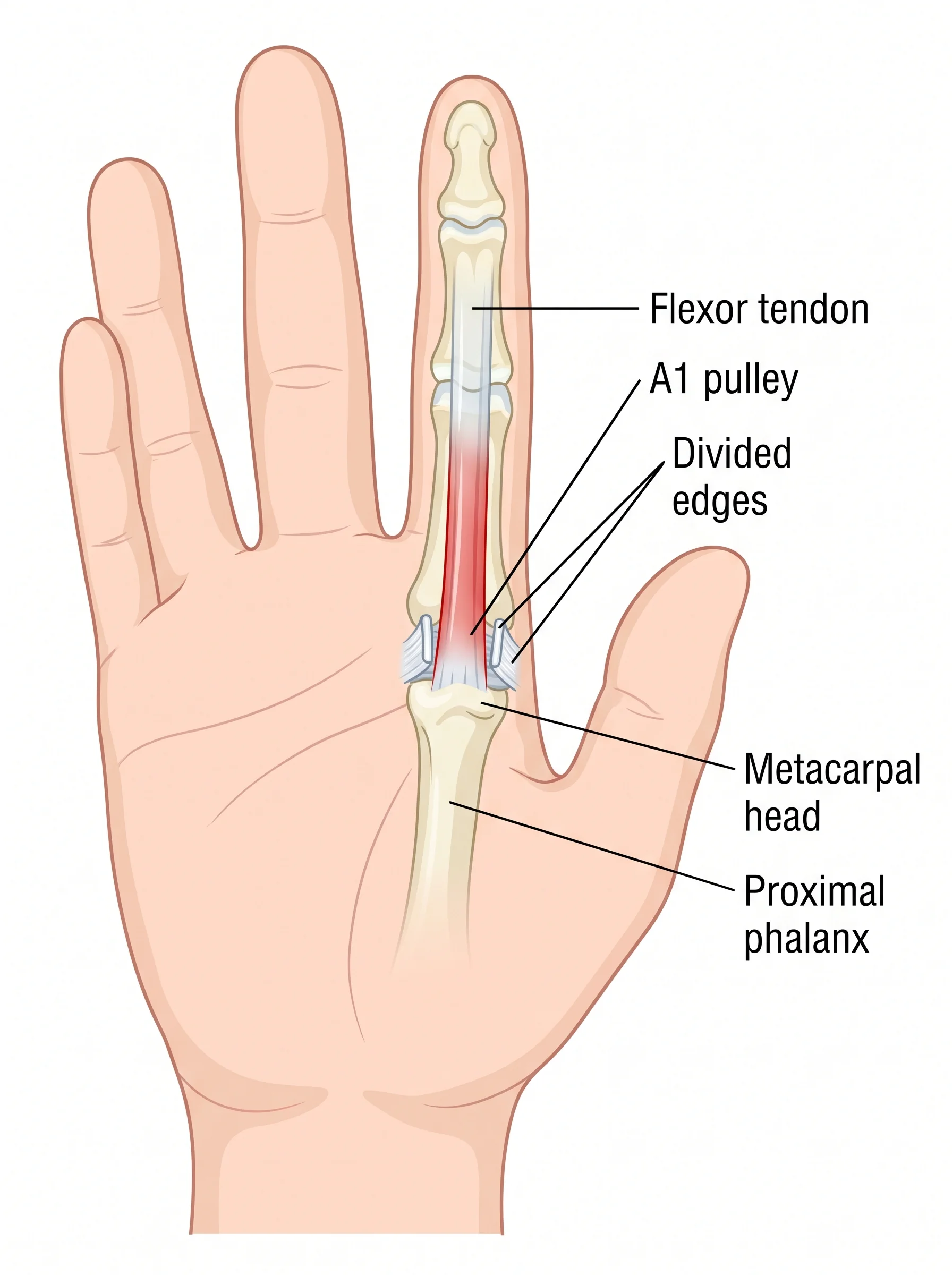
Relief may be lasting or may fade over months, and a second injection is sometimes tried. When catching continues or the finger locks, release surgery opens the tight pulley and helps most people regain smooth motion.
What are the treatment options?
- 01A splint that holds the finger straight, often worn at night, to rest the tendonA splint that holds the finger straight, often worn at night, to rest the tendon.
- 02Activity changes to reduce repeated forceful grippingActivity changes to reduce repeated forceful gripping.
- 03Gentle stretching and hand therapyGentle stretching and hand therapy.
- 04A corticosteroid injection, an anti-inflammatory medicine placed near the tendon sheath, wA corticosteroid injection, an anti-inflammatory medicine placed near the tendon sheath, which relieves many first-time cases.
- 05Trigger finger release, a surgery that opens the tight pulley so the tendon glides freely,Trigger finger release, a surgery that opens the tight pulley so the tendon glides freely, is considered when the finger keeps catching, when it locks, or when injections stop helping.
How do payments work?
Contact the office to confirm insurance participation.
Trained at Campbell Clinic (Orthopaedic Surgery Residency). Sees patients in Columbia.
About Dr. Hunter →